
Will circumcision change my baby’s sleep?
A baby may be fussier or sleep differently for a short time following circumcision. Normal newborn sleep patterns are already variable, so a single restless evening does not necessarily indicate a complication. Nonetheless, significant or persistent pain, poor feeding, unusual sleepiness, or a baby who seems unwell deserves attention from a qualified clinician.
Ask your circumcision provider what to expect for your baby’s specific age and technique. Keep written aftercare instructions available, especially during overnight diaper changes.
The safest sleeping position stays the same
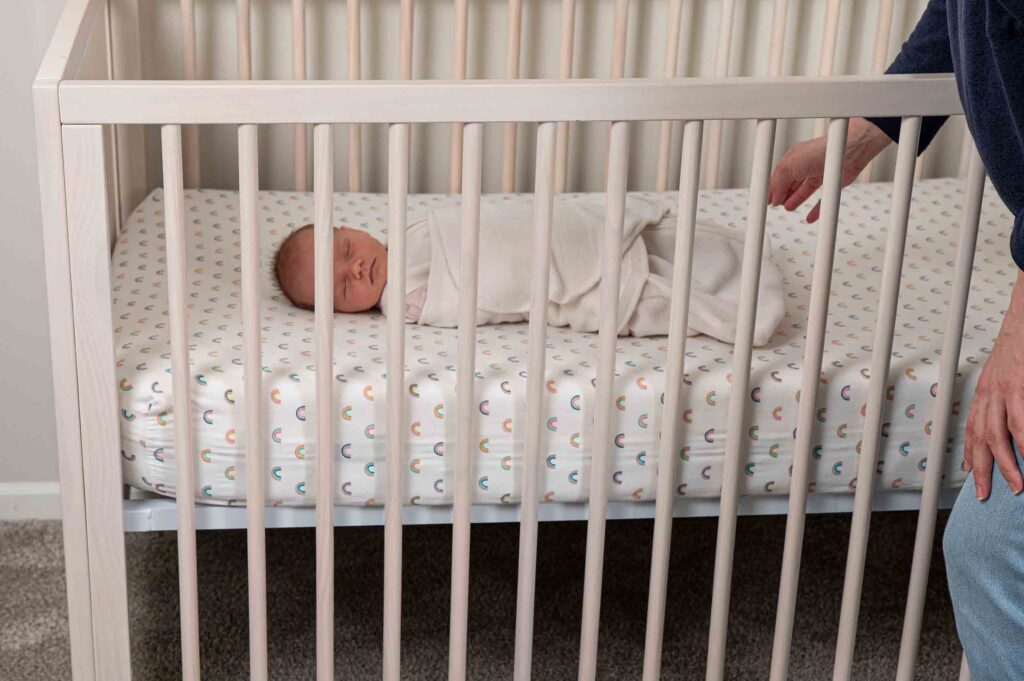
The American Academy of Pediatrics recommends placing babies on their backs for every sleep, on a firm, flat sleep surface with a fitted sheet and no loose blankets, pillows, soft toys, positioners, or inclined sleepers. Circumcision recovery is not a reason to place a baby on their stomach or side. Keep the infant’s own sleeping space in your room rather than on an adult bed or sofa.
Do not place rolled towels, wedges, or extra padding under a baby to try to protect the healing area. A baby should not sleep while held by an adult who may fall asleep.
Gentle ways to comfort your newborn
Try calm holding while you are awake, a soothing voice, and regular feeding appropriate for your baby’s age. A pacifier can be offered if it fits your child’s established feeding and safe-sleep needs. Ask your provider whether an ointment or dressing is recommended to reduce friction during diaper changes, rather than applying new products on your own.
Comforting a baby is not a substitute for appropriate pain control. If your baby appears to have pain that is not improving, contact the procedure provider or pediatrician. Never give pain medication to a newborn without medical guidance.
Diaper changes before bedtime
Change wet or soiled diapers according to the provider’s instructions and avoid fastening the diaper unnecessarily tightly. Follow the technique-specific guidance about cleansing, ointment, gauze, or dressing. Our aftercare supplies guide outlines what to ask about in advance.
Before you begin your own night, put clean diapers and any recommended aftercare supplies where they are easy for an awake caregiver to reach. Make sure all caregivers understand the same plan.
When fussiness or sleepiness needs medical attention
A newborn who is very difficult to wake, cannot be consoled, feeds poorly, has significant bleeding, or shows worsening swelling needs prompt medical advice. A rectal temperature of 100.4°F (38°C) or higher in an infant younger than three months requires immediate medical evaluation. If you are concerned about dehydration or reduced wet diapers, contact the pediatrician promptly.
For expected healing changes, read newborn circumcision aftercare and our related New Jersey newborn service information.
Planning ahead in New Jersey
At Holistic Circumcision, families can ask about preparation, technique, and access to aftercare guidance before booking. Review New Jersey circumcision services, appropriate at-home options, and appointment availability.
Explore our guides to circumcision healing stages and newborn pain control.
Frequently asked questions
Can my baby sleep on his stomach after circumcision?
No. The general safe-sleep recommendation remains back sleeping on a firm, flat, empty surface.
Can I cuddle my baby to help him settle?
Yes, while you are awake and can hold him safely. Move him to his own safe sleep space before you sleep.
Should I wake my baby for diaper changes?
Follow your pediatrician’s feeding and diaper guidance and your procedure provider’s individualized aftercare directions.
Sources and further reading
Medical note: Educational information only, not individual medical advice. Ask a qualified pediatric clinician or other appropriate healthcare professional about procedure suitability, pain control, bleeding concerns, and aftercare.